
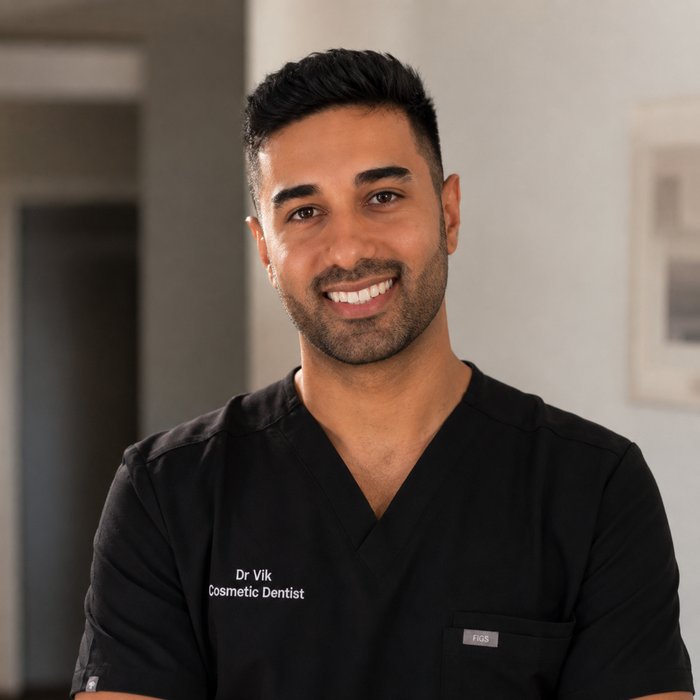
Invisalign with Dr. Vik
I've completed 200+ Invisalign cases — from simple corrections to smiles other dentists said aligners couldn't fix. Clear, removable and digitally planned around your face.
200+ Invisalign cases completed✓ Free consultations · ✓ 0% finance · ✓ Award-winning cases
Great aligner results are not luck. They are planned, tooth by tooth.
— How I approach every single case
How It Works
Treatment starts with an assessment, a custom digital plan and a series of aligners worn in sequence — and I plan every stage before your first aligner is even made.
I assess your smile, bite and goals, then use digital scans and photos to map the whole journey — you see the projected result before committing to anything.
Every aligner is made specifically for your teeth. Each set is designed to make small, controlled movements as treatment progresses.
You wear the aligners 20–22 hours a day, remove them for meals and cleaning, and move to the next set at the right stage of the plan.
Once your teeth are aligned, I refine the fine details, then protect the result with retainers — because a smile this good should stay that way.
Treatable Cases
Invisalign can help with a wide range of bite and alignment issues. Select the one that feels closest to your smile to see how I’d usually think about it in consultation.

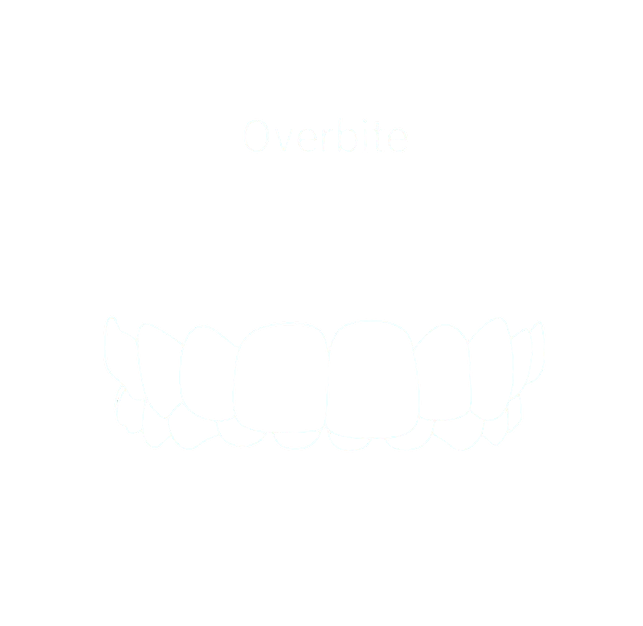
Useful when the upper teeth sit too far over the lower teeth and the bite needs better balance.
Real Cases · Real Patients
Every one of these smiles was planned and treated by me. Drag through — this is what 200+ cases of experience looks like.
What To Expect
Upfront — these are the parts of treatment I always explain before we start.
Small tooth-coloured dots I place on certain teeth to give the aligner grip for precise movements. Placed in minutes, barely noticeable, removed cleanly at the end.
A gentle polishing technique that creates a tiny amount of space between certain teeth — one of the most conservative ways to resolve crowding without removing any teeth.
Alignment first frequently means lighter cosmetic work later. Many of my patients whiten after Invisalign, then need only minimal bonding — or nothing at all.
SmileView
My personal Invisalign SmileView link — take a selfie, see a simulation of your potential result, and it comes straight to me. Free, instant, no commitment. Simulations are indicative and do not guarantee the final clinical result.
“Had another fantastic experience today! I'm currently getting my Invisalign treatment with Dr. Vik, and he's been amazing throughout the process — always making sure I understand everything along the way.”
Patient review — Google · Invisalign
Read more of my reviews →Questions? Answered.
No. Invisalign treats a wide range of cases — from straightforward spacing and crowding to more involved bite issues including overbites, crossbites and open bites.
The key factor is not severity but suitability. Some complex cases respond very well to aligners, while some apparently simple cases have biomechanical challenges. That's why I always assess properly with scans and photographs rather than guessing from the outside.
I've treated over 200 Invisalign cases across a broad spectrum of complexity — including patients who were previously told they weren't suitable for aligners.
20 to 22 hours per day. In practice, that means the aligners come out only for eating, drinking anything other than water, and brushing.
Consistent wear is the single biggest factor in keeping treatment on track. If you find compliance difficult, tell me at a review — there are ways to adjust the plan, but only if I know early.
Most patients feel some pressure or tightness when switching to a new set of aligners. It usually settles within 24 to 48 hours and is a sign the teeth are responding as planned.
It's not typically painful — more a firm awareness. A tip I give my patients: switch to a new tray in the evening so the initial tightness eases overnight.
Mild crowding or spacing may take 4 to 6 months. More involved cases with bite correction can take 12 to 18 months or occasionally longer.
I'll give you a realistic estimate at your consultation based on your specific plan. Refinement stages — extra aligners to fine-tune the result — are a normal part of the process, not a setback.
Yes — always. Teeth naturally drift back toward their original position, especially in the first year. Retainers are what keep your result stable.
I typically recommend a fixed retainer (a thin wire bonded behind the front teeth) combined with a removable night-time retainer. Retention isn't optional — it's the most important part of making the result last.
Yes — it's my most common treatment sequence. Straightening first often reduces how much cosmetic work is needed afterwards, because well-aligned teeth already look better.
After Invisalign, many of my patients whiten and then need only a small amount of bonding — or none at all. That's minimally invasive dentistry working as it should.
It depends on the complexity and length of your treatment — which is exactly why my consultations are free. You'll get a clear fee once we've discussed your plan, with no hidden charges and 0% finance available.
My fee typically includes all aligners, attachments, refinements and retainers.